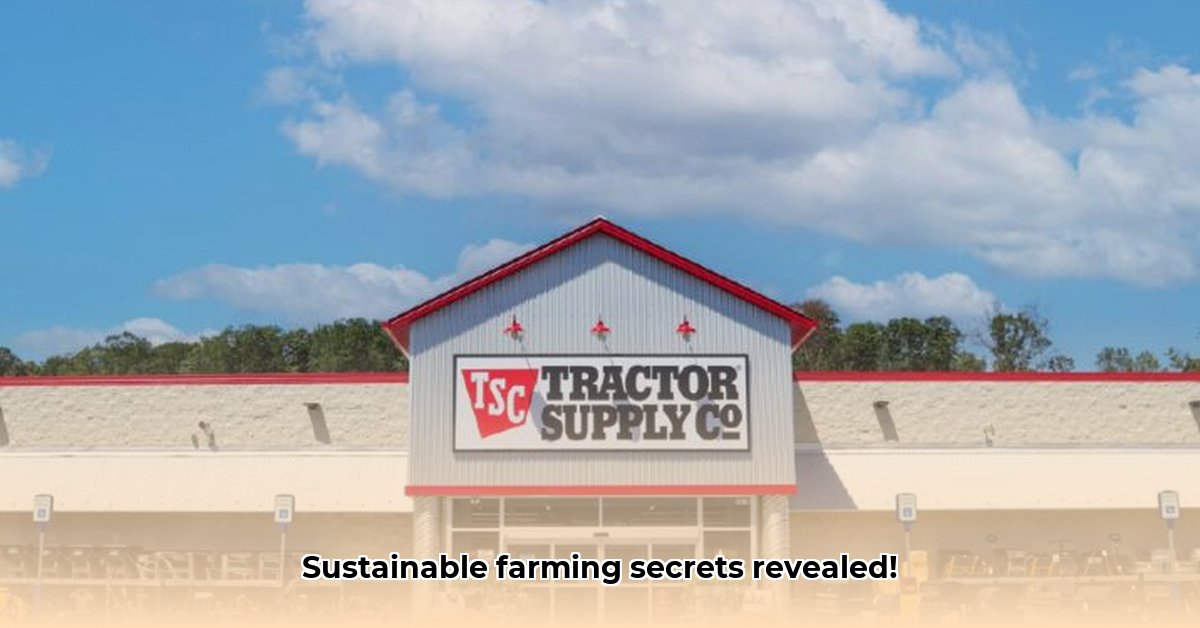
Tractor Supply's Potential Role in Berkeley Springs' Sustainable Agriculture
Tractor Supply Company (TSC) holds a prominent position in Berkeley Springs, West Virginia, serving the needs of local farmers. However, the extent of its contribution to sustainable agricultural practices remains unclear. This article investigates TSC's potential role, highlighting both opportunities and significant limitations in assessing its impact. We aim to analyze available data, acknowledge data gaps, and propose actionable steps for all stakeholders to foster a more sustainable agricultural future. For more information on TSC's equipment, check out this helpful resource.
Tractor Supply's Potential: Accessibility and Opportunity
TSC's convenient location offers significant potential to support sustainable farming. Its accessibility could facilitate farmers' access to organic seeds, eco-friendly fertilizers, and other sustainable inputs. Imagine a farmer needing organic pest control; a nearby TSC stocking such items could drastically improve efficiency and reduce reliance on potentially harmful chemicals. This accessibility represents a valuable, albeit currently unrealized, potential. However, the actual supply of these sustainable products within the Berkeley Springs TSC remains undocumented and requires further investigation. We lack concrete evidence to definitively assess the extent of TSC's commitment to sustainable agricultural supplies.
Challenges and Data Limitations: A Critical Assessment
A critical obstacle is the significant lack of publicly available data regarding TSC's sustainable initiatives in Berkeley Springs. We lack crucial information, including:
- Organic Product Inventory: The precise percentage of TSC's inventory dedicated to organic or sustainably sourced products is unknown.
- Sustainability Programs: Details on any specific sustainability programs implemented by the Berkeley Springs TSC, including employee training or partnerships with local organizations, are unavailable.
- Supplier Relationships: Information concerning TSC's relationships with local suppliers of sustainable agricultural products is absent.
This information scarcity severely limits a comprehensive evaluation of TSC's actual impact. Transparency is crucial for any meaningful assessment.
Stakeholder Analysis: Shared Responsibility
Several stakeholders bear responsibility for fostering sustainable agriculture in the region:
| Stakeholder | Role & Responsibility |
|---|---|
| Local Farmers | Advocate for sustainable product availability, actively seek out and utilize sustainable options from TSC. |
| Tractor Supply Co. | Conduct needs assessments, increase the availability of sustainable products, publicly disclose sustainability efforts. |
| Local Government/NGOs | Facilitate communication between farmers and TSC, provide support for initiatives that advance sustainable practices. |
| Consumers | Demand sustainably sourced products, support businesses committed to environmental stewardship. |
Call to Action: Concrete Steps for Progress
To enhance TSC's contribution to sustainable agriculture, the following steps are crucial:
- Conduct a Needs Assessment: TSC should conduct a thorough survey of local farmers, identifying their specific needs for sustainable supplies.
- Expand Sustainable Product Lines: Based on the assessment, TSC should actively expand its range of organic seeds, eco-friendly fertilizers, and other sustainable products.
- Promote Sustainable Practices: TSC should actively promote sustainable farming practices through educational materials and in-store displays.
- Foster Partnerships: TSC should collaborate with local farmers, government agencies, and NGOs to support sustainable agricultural initiatives.
- Increase Transparency: TSC should publicly report on its progress in expanding sustainable product offerings and supporting sustainable practices.
Conclusion: The Path Forward Requires Collaboration
While TSC holds substantial potential to contribute to sustainable agriculture in Berkeley Springs, its actual impact remains largely unknown due to significant data limitations. Further research is urgently needed to fill these knowledge gaps and quantify the company’s current role. Actively engaging all stakeholders – farmers, TSC management, government agencies, NGOs, and consumers – is crucial for realizing the potential of TSC and building a more sustainable agricultural future in the Berkeley Springs region. The collective effort to promote sustainable farming practices depends on transparency, collaboration, and action from all involved parties.